
Pavers in Tampa, FL
Pavers in Tampa usually fail for one reason: the base. The stones decide how a driveway or patio looks on the day it is finished. What is under them decides whether it still looks that way after a few summers of afternoon storms and car tires turning on it every day.
Harmonia Tile & Stone installs paver driveways, patios, walkways and pool decks across Tampa Bay. We are licensed and insured, based in Land O’ Lakes. Call or text (813) 446-2830.
Why Do Pavers in Tampa Sink or Shift?
Almost always one of four things, all of them decided before the first stone is laid.
A thin or poorly compacted base. Sand alone is not a base. Crushed aggregate, placed and compacted in layers, is. A driveway needs more of it than a walkway.
Water that was not planned for. Rain here comes fast and heavy. If the surface does not shed water away from the house, or a downspout empties onto one spot, the water gets under the pavers and carries the bedding sand away.
No edge restraint. Without a fixed edge the field spreads outward. It shows first as wider joints along the border, then as pavers that rock underfoot.
Empty joints. Joint sand locks the stones together so a load spreads over many pavers instead of one. Empty joints also let weeds and ants in.
None of these shows in a photo of a finished job. They show in the second or third rainy season.

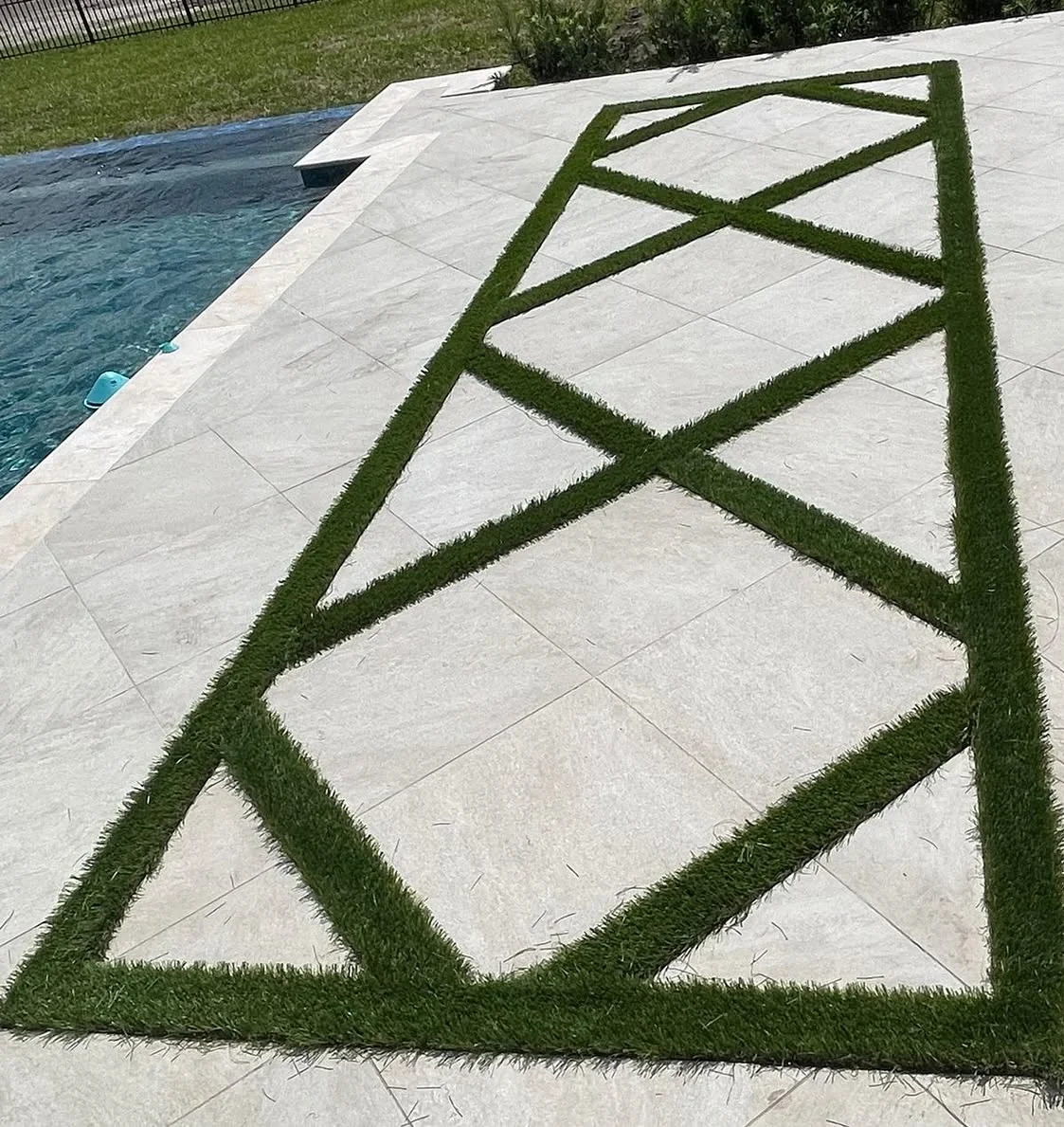
How a Paver Job Is Built
1. Layout and excavation
The shape is marked, the fall of the ground is checked, and the area is dug deep enough for the base, the bedding layer and the paver. Driveways are dug deeper than patios.
2. Compacted base
Crushed aggregate goes in and is compacted in layers, not all at once. It is the step that decides the rest and the easiest one to cut short.
3. Bedding layer
A thin, even layer of sand screeded over the base. It seats the pavers; it is not there to fix a bad base.
4. Laying the pattern
Pavers go down with consistent joints, and the pattern is planned so cut pieces fall where they are least visible.
5. Edge restraint
A restraint is fixed around the perimeter. Grass and soil are not an edge.
6. Compaction and joint sand
The field is compacted so the stones settle into the bedding, then polymeric sand is swept into the joints and activated.
7. Sealing, if you want it
Optional, and covered in the FAQ below.
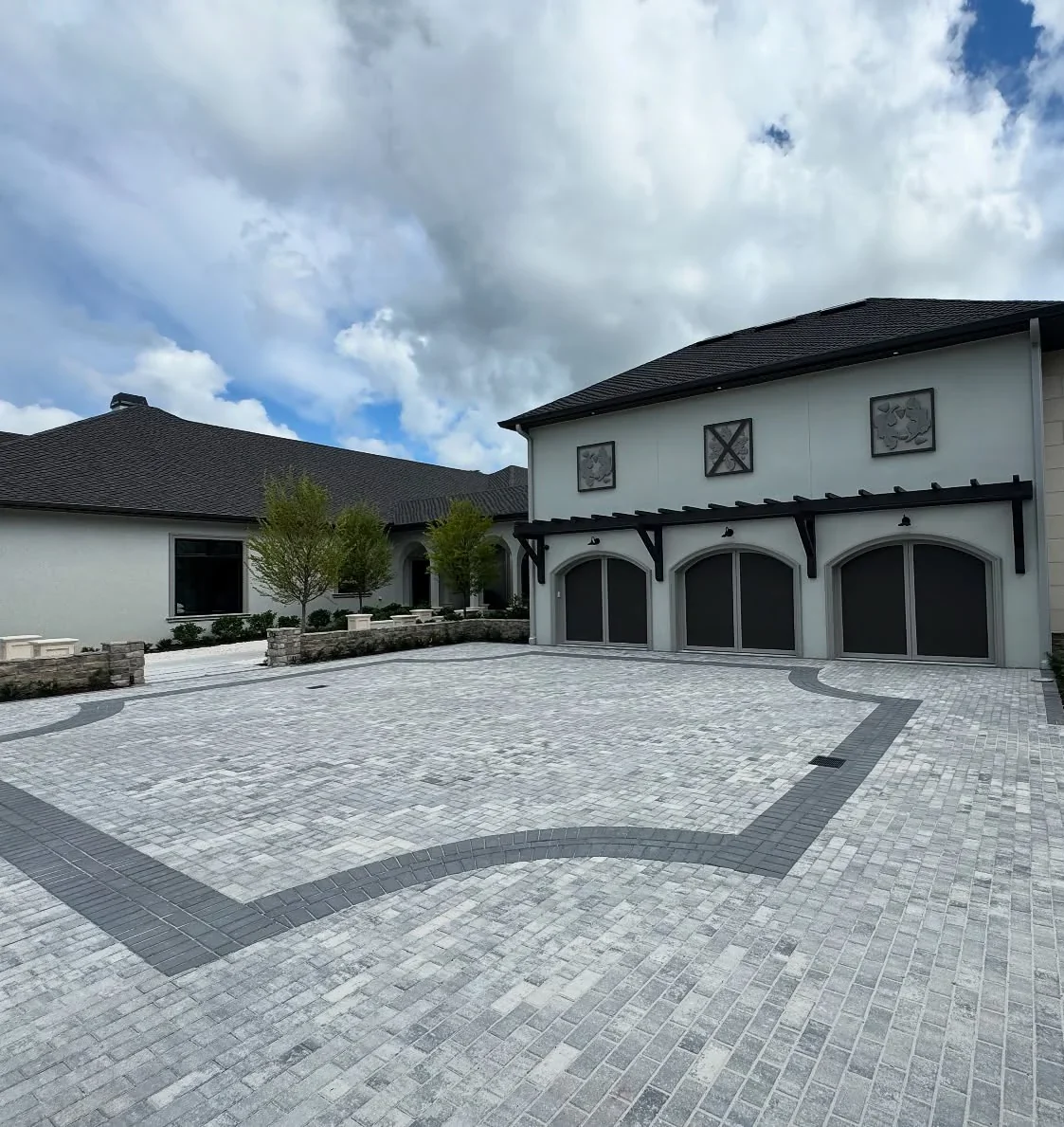
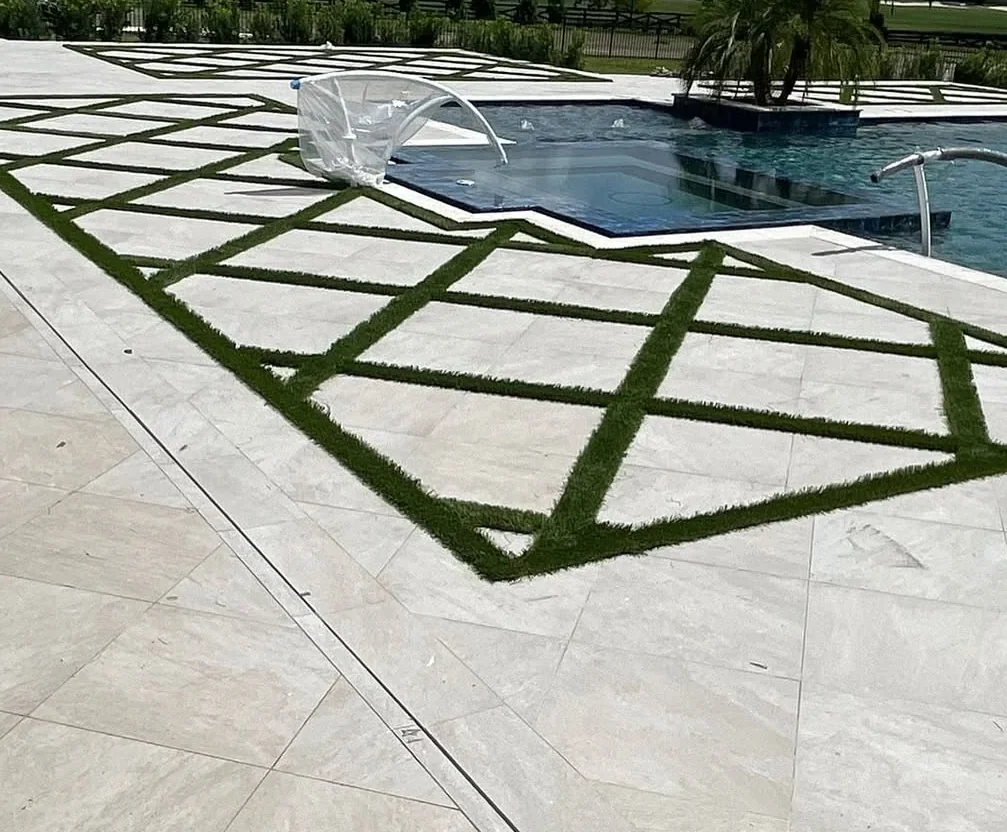
Drainage: What Florida Rain Tests First
Before any design, three things get checked: where the downspouts discharge, how the ground falls away from the house, and where water would stand if the new surface were flat. The paver surface is then pitched to carry water away from the foundation, toward somewhere it can drain.
Around a pool, the slope also keeps deck water out of the pool. Where the ground will not cooperate, a drain or a channel set into the paver field is often a better answer than a steeper slope.

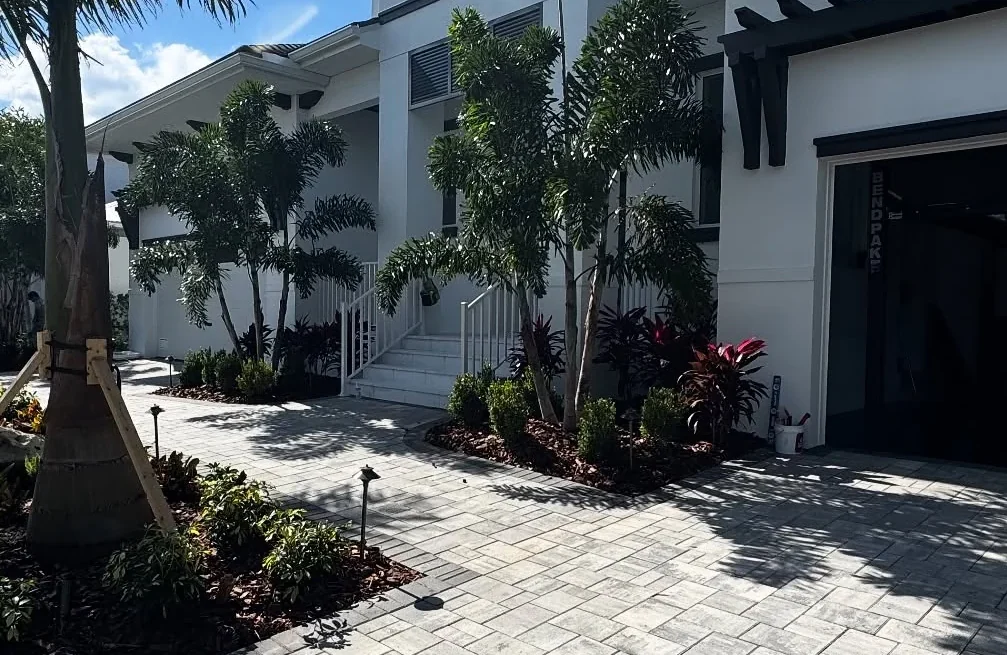
Driveways, Patios, Walkways and Pool Decks
Driveways carry the most weight, and the heaviest wear is where tires turn and where the driveway meets the street. They need the deepest base. Pavers also have one advantage over poured concrete on a driveway: a settled area can be lifted, the base repaired and the same stones put back, with no patch line.
Patios and walkways carry less weight but are seen up close, so pattern, color and straight edges matter more. A walkway from the driveway to a side gate is one of the smallest jobs that changes how a yard is used.
Pool decks stay wet, take chlorine or salt splash and are walked barefoot. Texture and color matter more here than anywhere: a surface that grips wet feet and does not get too hot in direct sun.


Which Pavers Work Best in Florida?
Concrete pavers have the widest range of shapes and colors, handle vehicle loads well and are easy to match for a repair later. Strong sun softens their color over the years.
Travertine pavers are the common choice around pools because light travertine stays cooler underfoot and has a textured surface. As a natural stone, it needs sealing and a very flat base. The Travertine & Marble page covers stone decks.
Porcelain pavers are dense, keep their color and need little maintenance. They are less forgiving of an uneven base and usually cost more.
The right choice depends on what the surface is for. A driveway, a shaded patio and a pool deck in full sun can each call for a different paver.


Pavers or Concrete?
Poured concrete costs less up front on a large, plain area. Pavers give you a pattern, a choice of color and, more practically, repairs without a visible patch: a section can come up for a pipe or a root and go back down. Concrete is one slab; when it cracks, the crack stays.

Can Pavers Go Over an Existing Slab?
Sometimes. A slab that is sound, drains away from the house and can take the added height can be overlaid with thinner pavers. A slab that is cracked, settling or holding water is the wrong base, because whatever moves under it moves the pavers too. Door thresholds, the garage apron and the pool coping set the limit on how much height can be added.


Request an Estimate for Pavers in Tampa
Tell us whether it is a driveway, patio, walkway or pool deck and roughly how big the area is. We schedule a visit, look at drainage and access, and give you a quote for what your yard needs.
Call or text (813) 446-2830.
Ready to Start Your Project?
Tell us what you have in mind and we’ll give you a clear quote.
Areas We Serve
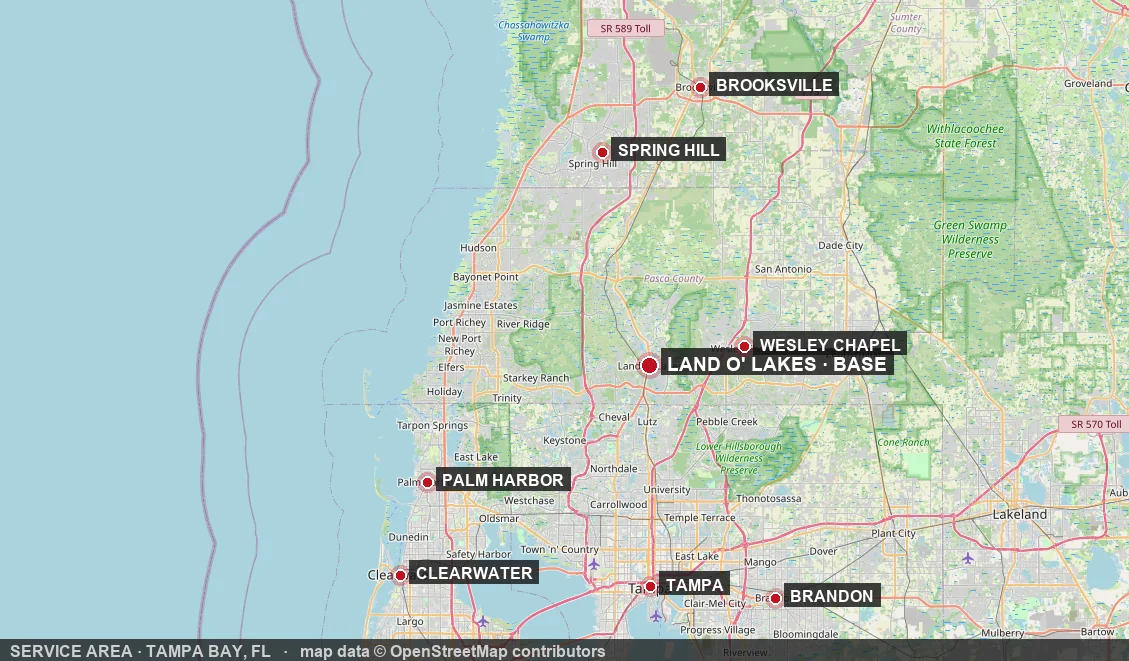
Pavers in Tampa and across Tampa Bay. The city pages for Spring Hill, Wesley Chapel and Brooksville cover what changes on larger lots, new builds and sloped yards.
Let’s Talk About Your Project
Tell us what you have in mind and send photos if you have them. We will get back to you to set up a visit.
Pavers in Tampa: FAQ
Why are my pavers sinking?
Usually the base: too thin, not compacted properly, or washed out by water that was not directed away. A missing edge restraint or empty joints make it worse. The sunken section can be lifted, the base rebuilt and the same pavers reset.
Do pavers need to be sealed in Florida?
Not for strength. A sealer deepens the color, makes stains easier to clean and helps hold the joint sand, and it has to be reapplied every few years depending on the product and the sun. Plenty of paver driveways are never sealed.
Can pavers be pressure washed?
Yes, with care. A high-pressure tip held close can wash the sand out of the joints, so the joints usually need fresh polymeric sand afterward, and sealing, if you use it, comes after that.
Can pavers go over sprinkler lines?
Lines under the planned area are located before excavation and rerouted or sleeved where needed. It is much easier to deal with them before the base goes in.
What goes into the price of a paver job?
The size of the area, the paver material, how much digging and old material removal is needed, drainage work, the pattern and the number of cuts, and whether sealing is included. Contact us with the size and the material you have in mind to start.