Hardwood Flooring in Tampa, FL
Hardwood flooring in Tampa has to deal with two things most of the country does not: a concrete slab instead of a wood subfloor, and air that stays humid for months. Both are manageable, and both decide which wood to buy and how it has to be installed.
Harmonia Tile & Stone installs solid and engineered wood floors across Tampa Bay. Licensed and insured, based in Land O’ Lakes. To talk about your floors, call us at (813) 446-2830 or send a text.
Can You Have Hardwood Flooring in Tampa Homes?
Yes, with the right product in the right rooms. The advice you may have heard against wood floors in Florida comes from solid wood glued or nailed straight to a slab that was never tested, in a house where the air conditioning goes off for weeks. That floor cups and gaps. A floor chosen and installed for the conditions does not.
What decides it:
- What is under the floor. Most homes here sit on a slab. Concrete holds moisture and releases it upward. Engineered wood, built from cross-layered plies, stays stable over it; solid wood is better suited to a raised wood subfloor.
- How the room is used. Living rooms, bedrooms, dining rooms, offices and hallways suit wood. Bathrooms, laundry rooms and the door in from the pool do not. Kitchens depend on the household.

Solid or Engineered?
Solid hardwood is one piece of wood through its thickness. It can be sanded and refinished several times, which makes it the longest-lived option. It is also the most sensitive to humidity and is normally installed over a wood subfloor, not directly on a slab.
Engineered hardwood is a real wood top layer over a stable plywood core. That top layer, the wear layer, is the number to compare: a thick wear layer can be refinished at least once, a very thin one cannot. Engineered is the practical choice over a slab and handles a house that swings between air conditioning and open doors.
Between two engineered floors, compare the wear layer and the recommended installation method rather than the name on the box.

Moisture Testing and Acclimation
Before any wood goes down, the slab or subfloor is tested for moisture. The reading decides whether the floor can be installed yet, and which method and moisture barrier to use.
The wood also needs time in the house before installation so it adjusts to the conditions it will live in. How long depends on the product and the manufacturer’s instructions.
After installation the same logic applies. Wood does best with steady indoor conditions. A house closed up with the air conditioning off for weeks in August is the hardest test a wood floor can get.


Glue-Down, Floating or Nail-Down
Glue-down bonds the boards to the slab with an adhesive, often one that also acts as a moisture barrier. It feels solid and quiet underfoot, and it is the common method for engineered wood on concrete.
Floating joins the boards to each other, not to the floor, over an underlayment. It is quicker, tolerates small slab imperfections, and is the method many condominium rules are written around because of the acoustic underlayment. It can sound slightly hollow compared with glue-down.
Nail-down fastens the boards into a wood subfloor. It is the traditional method for solid wood and is not possible directly on a slab.
With any method, the slab has to be flat. Flat is not the same as level: a floor can slope a little and be fine, but dips and humps cause hollow spots, squeaks and, in a click floor, broken joints. High spots are ground and low spots filled before installation starts.

Where Wood Belongs and Where Tile Is Better
Wood suits living and family rooms, bedrooms, home offices, dining rooms, and hallways that are not the route from the pool to the kitchen.
Tile suits bathrooms, laundry rooms, the entry from the lanai or the garage, and any room where water on the floor is normal rather than an accident.
A common arrangement is wood in the living and sleeping areas and tile in the wet rooms, with planned transitions between them. Wood-look porcelain is the option when you want the look in a room that gets wet; see Tile Installation.

Finish, Species and Pattern
Prefinished boards arrive with a factory-cured finish: no sanding dust, no fumes, no drying time between coats, and small bevels at the board edges.
Site-finished floors are sanded and coated in place. The surface is continuous, without bevels, and the stain can be matched exactly. It takes longer and the rooms are out of use while the coats cure.
On color and species: light, matte floors hide dust, sand and pet hair better than dark glossy ones. Harder species resist dents better, which matters with large dogs or heavy furniture. Wide planks look current and move more with humidity than narrow strips.
Herringbone, chevron, borders and inlays turn the floor into the feature of the room. They take longer, use more material in cuts, and should be planned at the estimate.

Living With a Wood Floor in Florida
Sand works like sandpaper underfoot, so mats at the doors and regular sweeping do more for a wood floor than any product. Felt pads under furniture, a damp mop rather than a wet one, a cleaner made for your finish, and blinds or window film where the afternoon sun hits the floor, because UV shifts the color of wood over time.
When the floor eventually looks worn, solid wood or engineered wood with a thick wear layer can be refinished instead of replaced.
Request an Estimate for Hardwood Flooring in Tampa
Call or text (813) 446-2830 to schedule a visit. We test the slab, go through solid and engineered options for your rooms, and give you a written scope with the price.
Ready to Start Your Project?
Tell us what you have in mind and we’ll give you a clear quote.
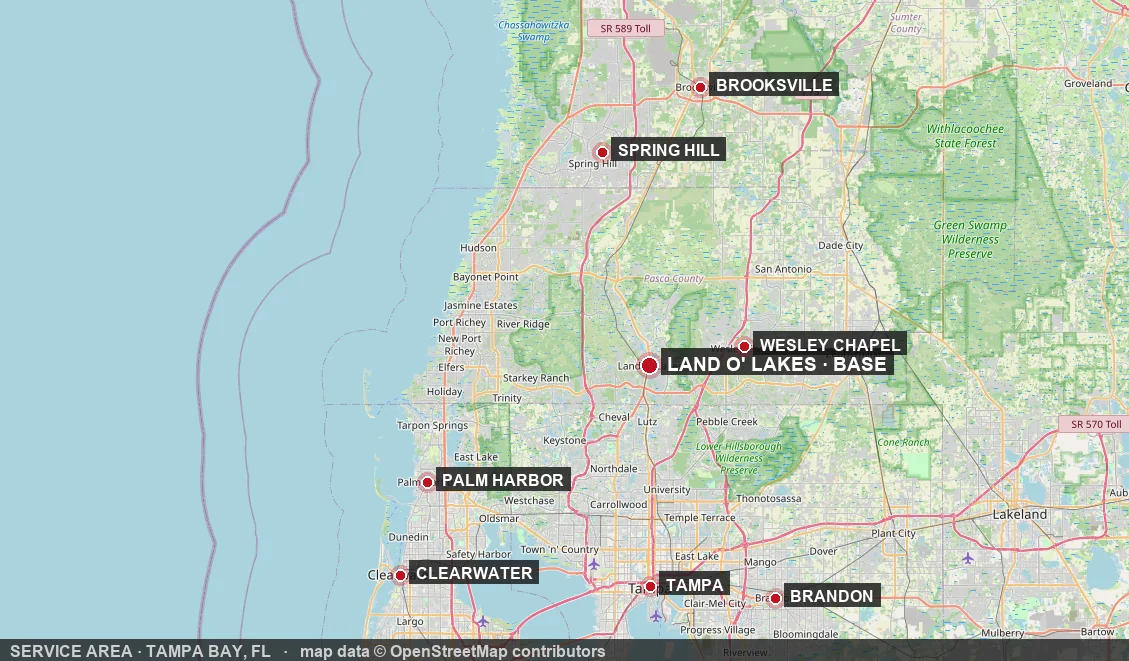
Areas We Serve
Wood floor installation in Tampa and across Tampa Bay, from Land O’ Lakes.
Let’s Talk About Your Project
Tell us what you have in mind and send photos if you have them. We will get back to you to set up a visit.
Hardwood Flooring in Tampa: FAQ
Can hardwood go directly on a concrete slab?
Engineered wood can, glued or floated, after the slab is tested for moisture and made flat. Solid wood on a slab usually means building a wood subfloor first.
Can hardwood go over existing tile?
Engineered wood can float over tile that is flat, solid and fully bonded, which avoids demolition. It depends on the height gained at doors, cabinets and transitions, and on whether any tile sounds hollow. Solid wood usually means removing the tile first.
How long does installation take?
It depends on the square footage, the method and whether the floor is finished on site. Site finishing adds curing time before furniture goes back. You get the schedule in writing before work starts.
Do I need to leave the house?
Usually not. Most jobs go room by room. Sanding and finishing on site is the exception, because of the dust and fumes while it cures.
Can wood floors be refinished later?
Solid wood, several times. Engineered wood, when the wear layer is thick enough. That is the specification worth checking before you buy.
What affects the price of a wood floor?
Species and grade, solid or engineered, wear layer thickness, prefinished or site-finished, how much slab preparation is needed, pattern work, and removing the existing floor. Contact us with the rooms and the square footage to start.