Travertine & Marble in Tampa, FL
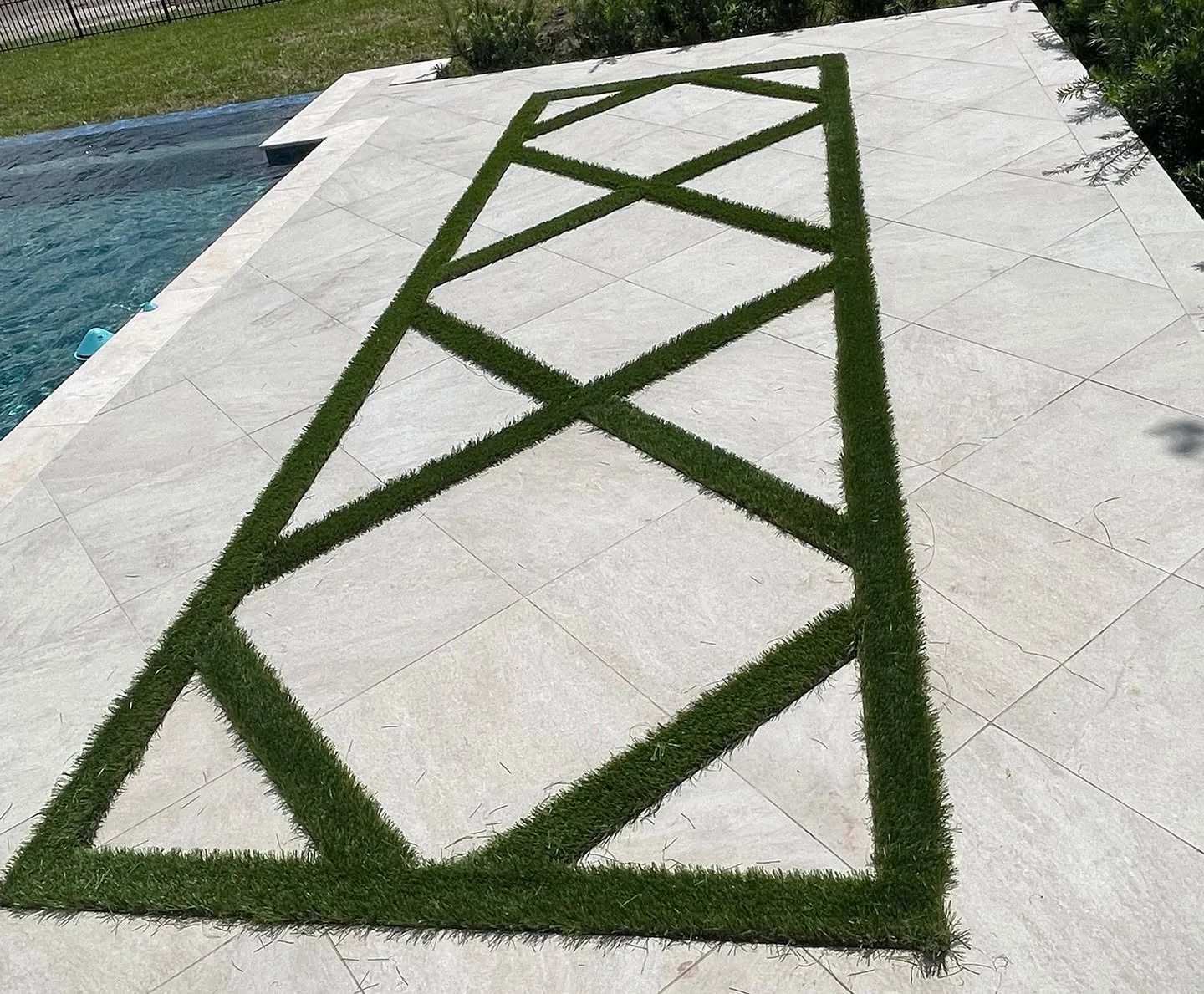
Travertine in Tampa is mostly chosen for one reason: around a pool, light travertine stays cooler under bare feet than dark concrete. Marble is chosen for the opposite setting, indoors, on a floor or a shower wall that is meant to be looked at.
Harmonia Tile & Stone installs travertine and marble across Tampa Bay. We are licensed and insured, based in Land O’ Lakes. Call us at (813) 446-2830, by call or text.
Is Travertine a Good Choice for a Pool Deck in Tampa?
For most pools, yes. The reasons are practical.
Heat. Light travertine reflects more sun than dark concrete pavers and stays more comfortable to walk on in summer. Color still matters: the darker the stone, the more heat it holds.
Grip. Tumbled and brushed travertine has an open, textured surface that gives wet feet something to hold. Polished travertine is the opposite and belongs indoors.
Repairs. Laid as pavers over a compacted base, individual pieces can be lifted and reset if an area settles.
Salt and chlorine. Splash-out is part of pool life. Rinsing the deck regularly does more for the stone than any product, and the coping, where the deck meets the water, takes the most exposure.


Travertine Pool Deck: Pros and Cons
| Pros | Cons | |
|---|---|---|
| Comfort | Stays cooler in the sun in light colors | Dark colors get hot |
| Safety | Good grip in tumbled or brushed finish | Polished finish is slippery when wet |
| Upkeep | Rinses clean, repairs one piece at a time | Porous: needs sealing, shows stains if unsealed |
| Look | Natural variation, no repeating pattern | Natural holes and color shifts are part of the stone |
If you want the stone look with almost no maintenance, porcelain pavers are the alternative.
Can Travertine Go Over an Existing Concrete Pool Deck?
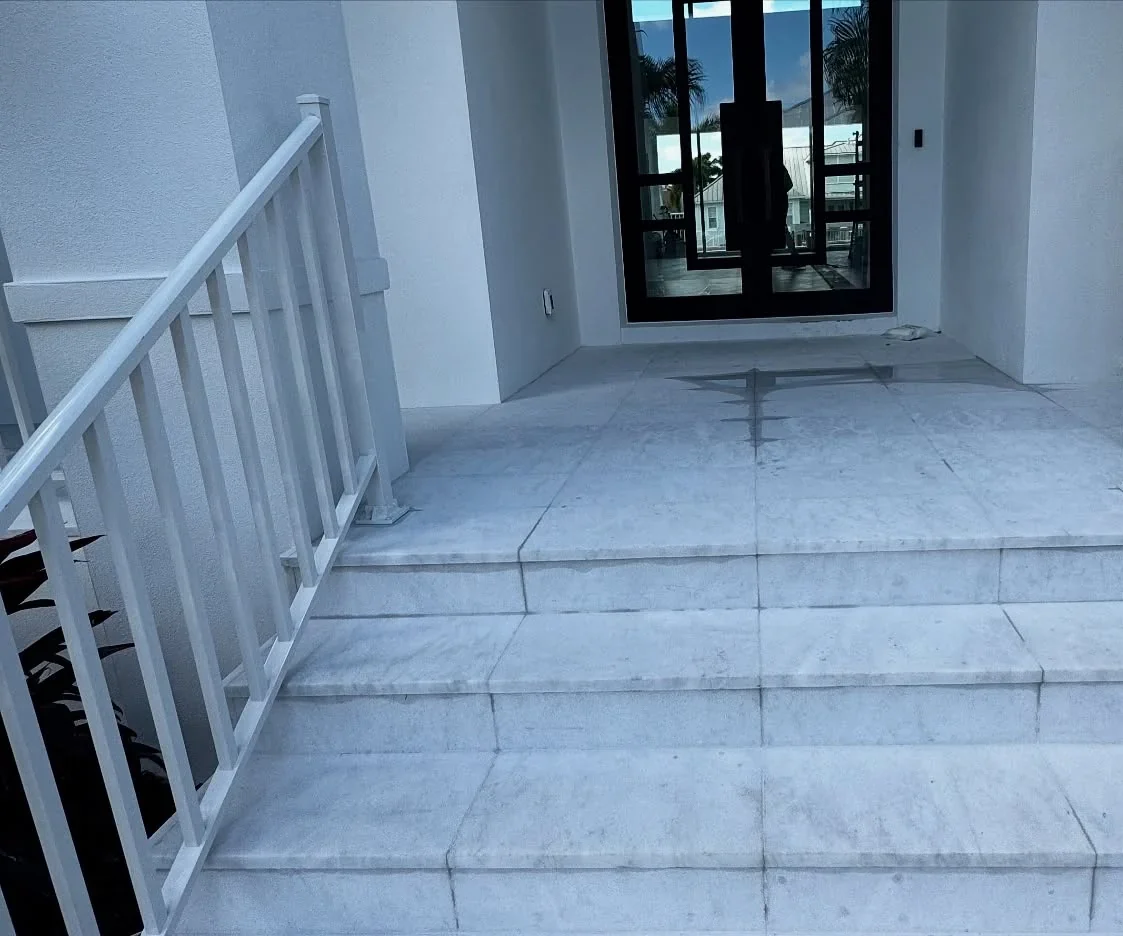
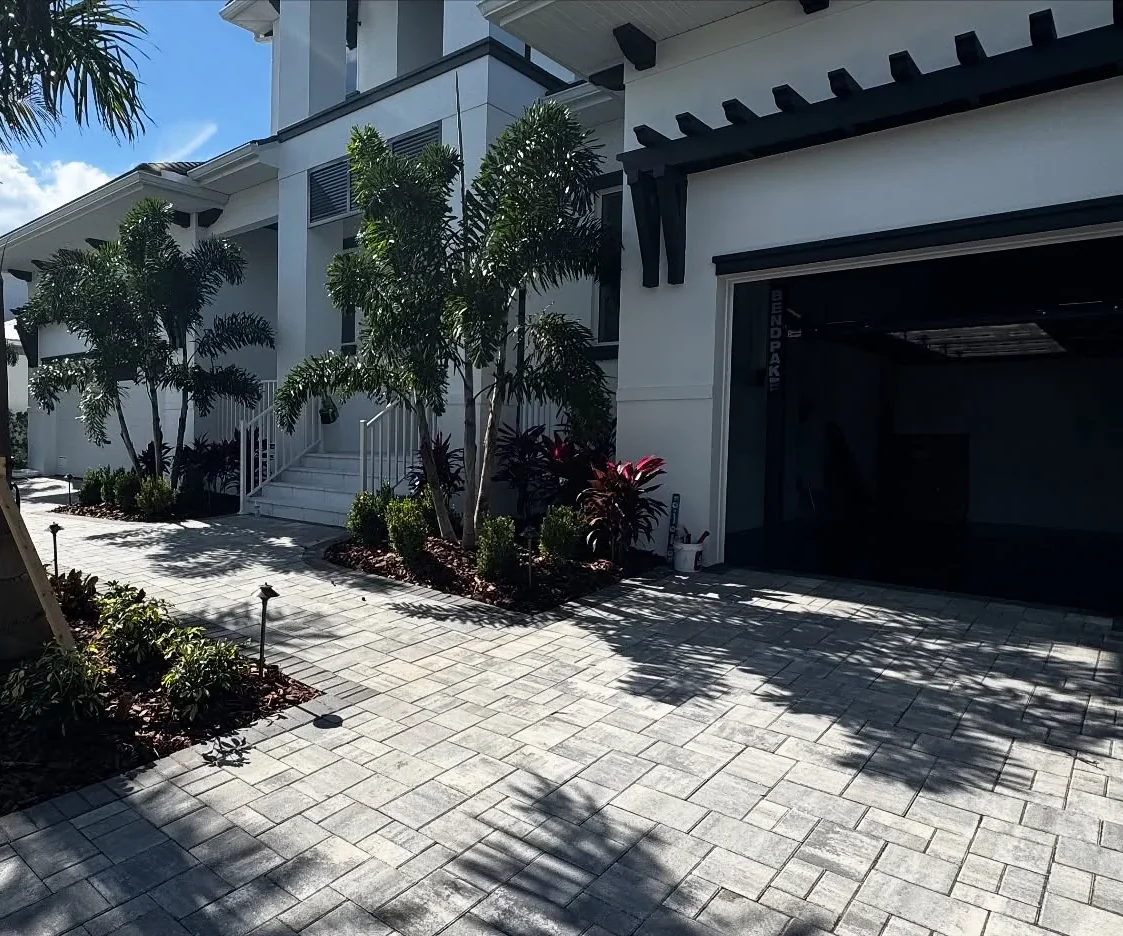
Often, yes. Thinner travertine pavers can be set over a pool deck that is sound and drains away from the pool, with the pieces bonded to the concrete. The checks are the same as for any overlay:
- Cracks and movement. A crack in the deck will come through the stone above it.
- Height. The new surface has to work with the pool coping, the door thresholds and the screen enclosure base.
- Drainage. Water has to keep moving off the deck and away from the house after the overlay.
A deck that is cracked, settling or holding water is better removed and rebuilt on a compacted base. The Pavers page explains that base.


Coping
The coping is the stone at the edge of the pool. Bullnose, square and rebated edges change how the edge feels underfoot and how water runs at the tile line. If the pool tile is being replaced, doing both at the same time avoids a second job later.


Marble and Travertine Indoors
Indoors, stone is set like tile, and the substrate matters even more than with porcelain. Natural stone is less forgiving of movement, and large pieces show any dip immediately.
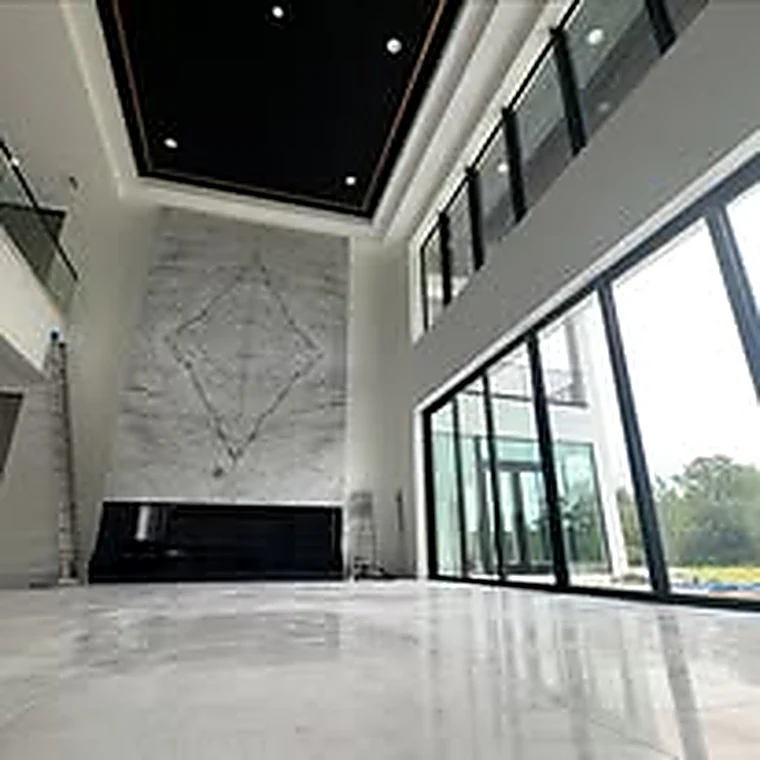
Marble floors suit entries, formal rooms and primary bathrooms. Marble is softer than porcelain, which gives it its look and also means it scratches more easily on a sandy path from the door.
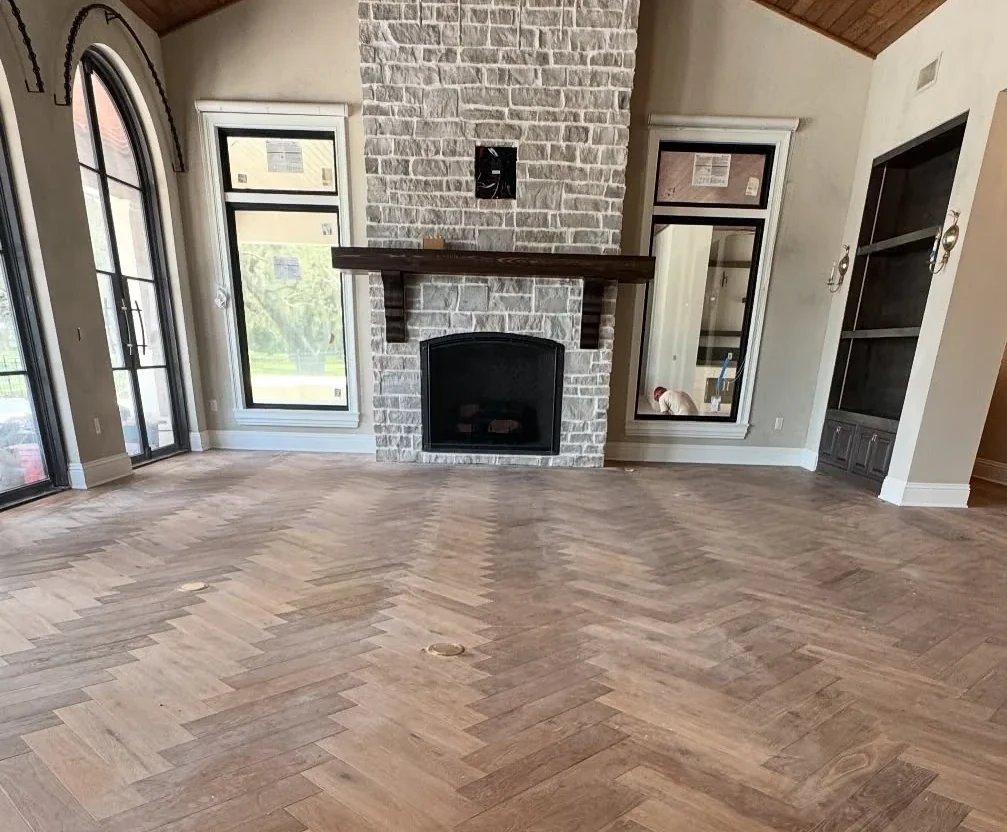
Travertine floors have a warmer, earthier tone. Filled and honed travertine gives an even surface; unfilled travertine shows its natural holes, which some people like and others find harder to keep clean.
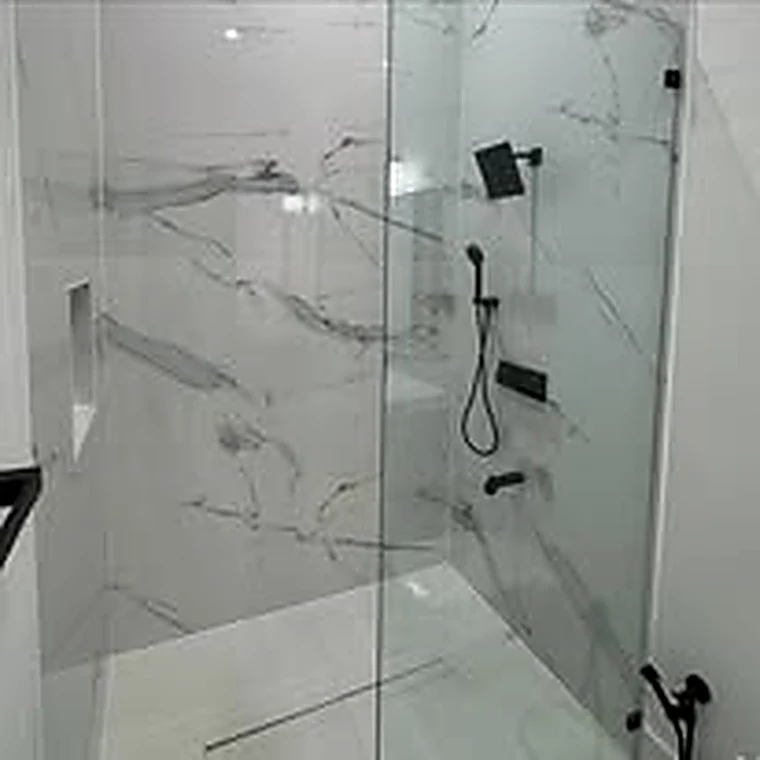
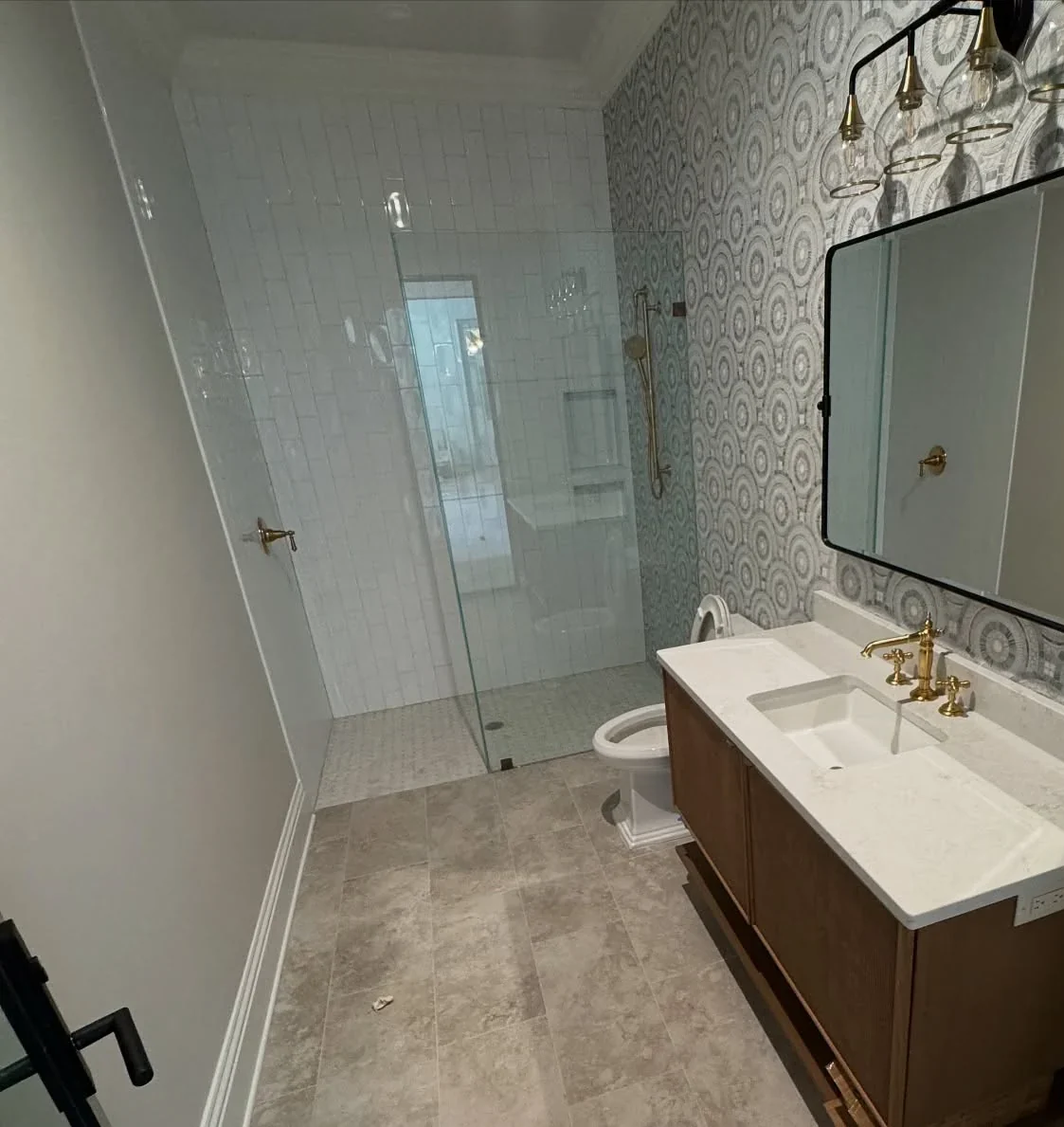
Marble showers and walls are where marble shows best. A marble shower needs full waterproofing behind it, sealing, and pH-neutral cleaners. The Bathroom Remodel page covers the rest of the room.

Honed, Polished, Tumbled: Which Finish?
- Polished: reflective; shows etching and water spots first; slippery when wet. Indoors, in dry, low-traffic rooms.
- Honed: matte; hides etching much better; easier to live with. The usual choice for interior stone floors.
- Tumbled or brushed: textured with softened edges; the best grip. The finish for pool decks and patios.
- Filled or unfilled: filled travertine is smooth; unfilled shows the natural holes.
What Sealing Does, and What It Does Not
A penetrating sealer does not coat the stone or make it waterproof. It slows absorption, so a spill can be wiped up before it becomes a stain. It does not stop etching. Etching is a chemical reaction: acids such as wine, citrus and some bathroom cleaners dull the surface of marble and travertine whatever sealer is on it.
How often to reseal depends on the stone, the finish and the exposure. A simple test: put a few drops of water on the surface and wait a few minutes. If the stone darkens, it is time. A pool deck in full sun and a powder room floor will not need it at the same time.
For cleaning, use a pH-neutral stone cleaner and water. Vinegar and acidic bathroom products are what damage stone.

Can You Pressure Wash a Travertine Pool Deck?
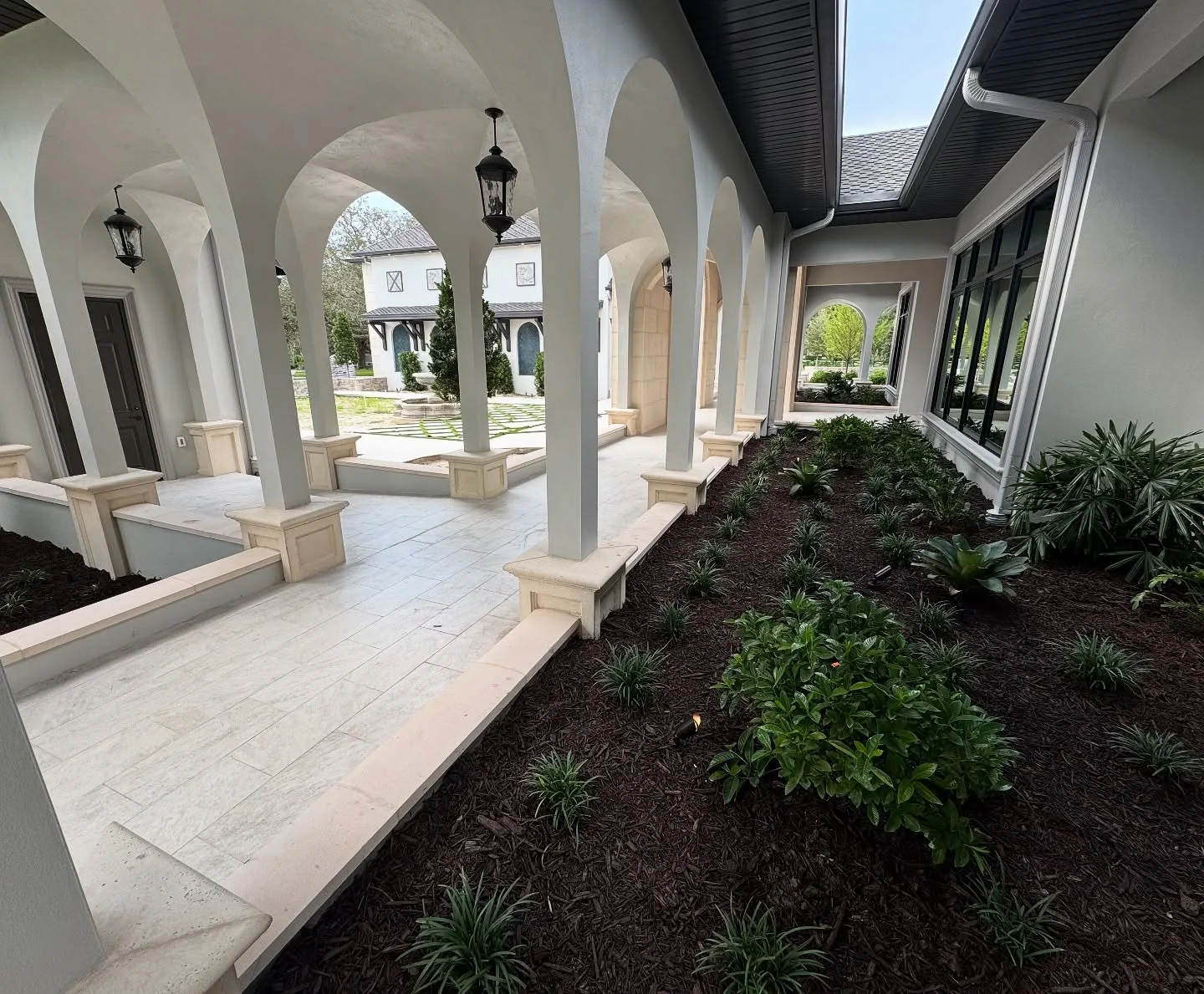
Yes, at moderate pressure and with a wide fan tip held back from the surface. Too much pressure can open the surface of the stone and wash out the joint sand. After a deep clean, the joints may need topping up, and if the deck is sealed, that is the time to reseal.


Travertine, Marble or Stone-Look Porcelain?
| Travertine | Marble | Stone-look porcelain | |
|---|---|---|---|
| Natural stone | Yes | Yes | No |
| Sealing needed | Yes | Yes | Not for the tile |
| Reacts to acids | Yes | Yes | No |
| Stays cooler in sun | Light colors, yes | Varies | Varies by color |
| Best known for | Pool decks, patios | Showers, formal floors | Low-maintenance stone look |
Stone-look porcelain gives the look with very low absorption and no etching, which makes it a strong choice for busy kitchens, family bathrooms and rentals. The trade-off is a printed surface with repeating patterns. See Tile Installation for porcelain.

Request an Estimate for Travertine in Tampa
Call or text (813) 446-2830 to schedule a visit. Tell us whether it is a pool deck, a patio or an interior floor, and whether there is an existing deck or floor to work with.
Ready to Start Your Project?
Tell us what you have in mind and we’ll give you a clear quote.
Areas We Serve
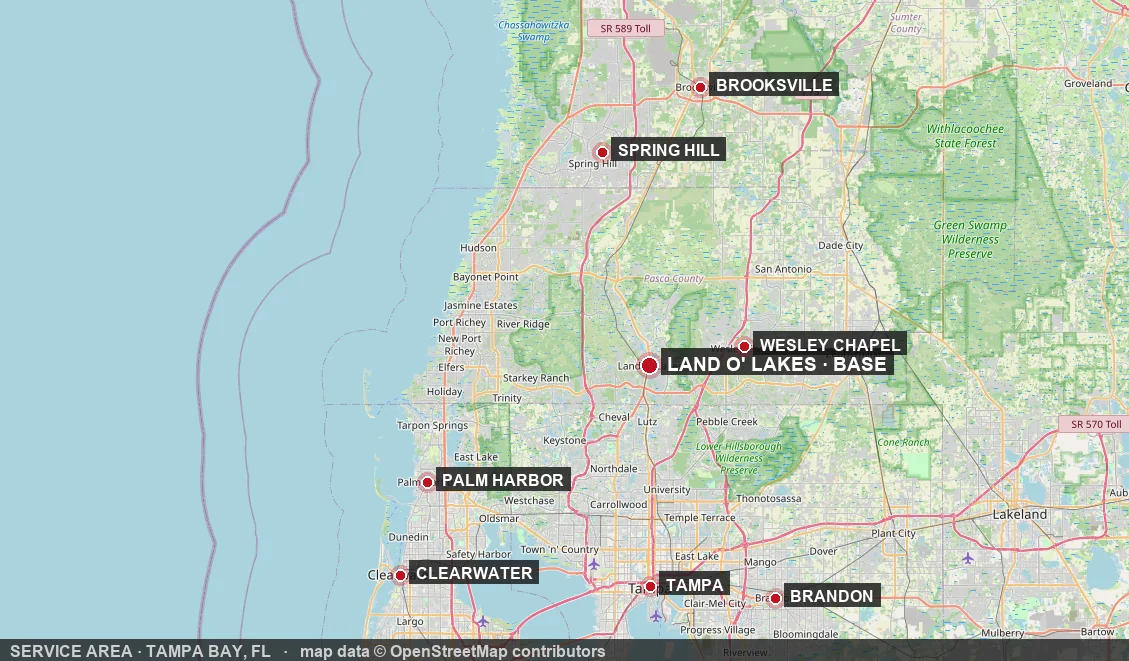
Travertine and marble projects in Tampa and across Tampa Bay, from Land O’ Lakes.
Let’s Talk About Your Project
Tell us what you have in mind and send photos if you have them. We will get back to you to set up a visit.
Travertine in Tampa: FAQ
Is a travertine pool deck slippery when wet?
The finish decides it. Tumbled and brushed travertine grips well with wet bare feet. Polished travertine is slippery and belongs indoors.
Does travertine get hot in the Florida sun?
Light travertine stays cooler underfoot than dark concrete pavers, which is the main reason it is chosen for pool decks. The darker the color, the hotter it gets.
Does a travertine pool deck need to be sealed?
It is not required for the stone to last, but sealing slows absorption so leaf stains, sunscreen and spills are easier to clean. How often depends on sun and traffic; the water-drop test tells you when.
How long does a travertine pool deck last?
Travertine is a dense natural stone, and a deck on a well-built base lasts for many years. What shortens its life is the base and the drainage, not the stone.
Can marble be used in a shower?
Yes, on the walls in particular. It needs proper waterproofing behind it, sealing, and pH-neutral cleaners. Acidic products etch it over time.
What affects the price of a travertine or marble project?
The area, the stone and its grade, the finish, the base or substrate preparation, removal of the old surface, waterproofing in showers, drainage outdoors, the pattern and cuts, and sealing. Contact us to go through them for your project.